
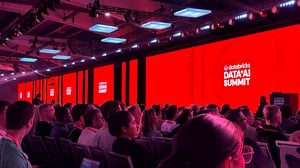
The 2026 Databricks Data + AI Summit in San Francisco made one thing abundantly clear: the industry is moving beyond experimentation and into the era of production-scale AI.
Across four days of keynotes, technical sessions, customer stories, and product announcements, Databricks unveiled a vision centered on agentic AI, real-time data intelligence, unified governance, and enterprise-ready AI applications. From the introduction of Genie One and expanded AI governance capabilities to new innovations in Lakehouse architecture, operational AI, and data platform performance, the announcements reflected a common theme – helping organizations turn trusted data into measurable business outcomes faster than ever before.
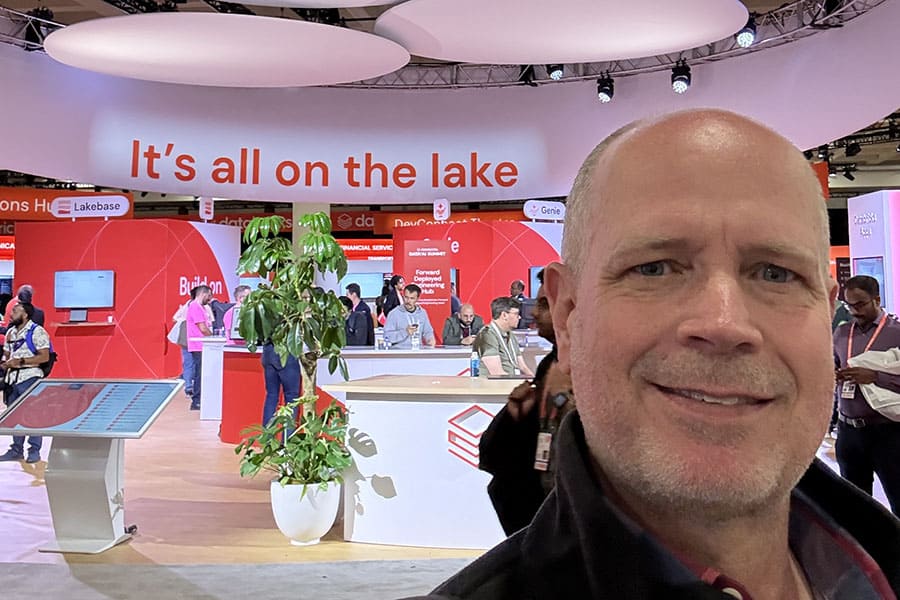
Our Senior Databricks team attended the summit to learn directly from Databricks product leaders, customers, and partners, and in this article we share the announcements, trends, and insights we believe will have the greatest impact on enterprises building modern data and AI platforms.
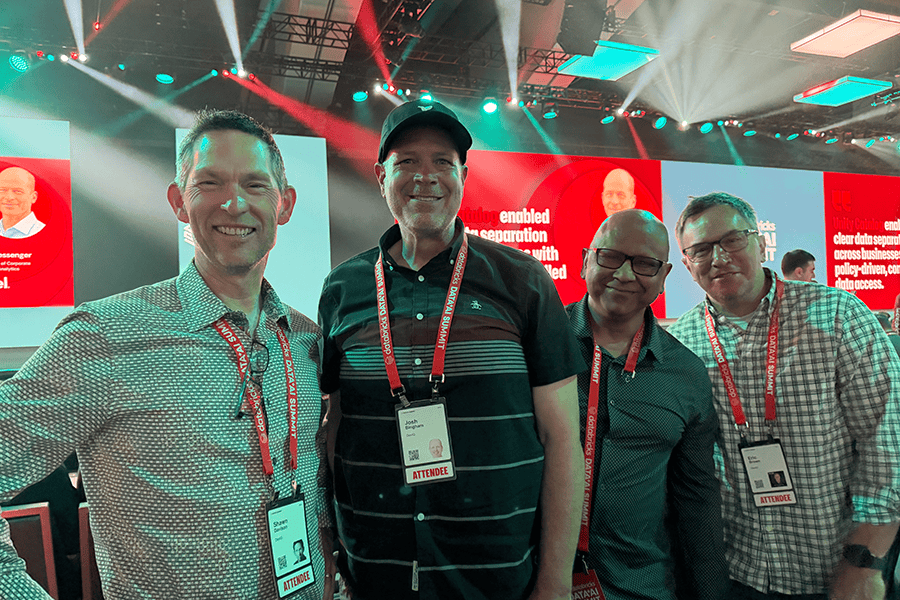
Thoughts from Shawn Davison
Managing Partner and Co-Founder at DevIQ [LI]
Genie Upgrades
I am very excited about the new Databricks Genie products (One, Ontology, ZeroOps) as we’ve been an early adopter of deploying Genie for our customers, in particular multi-tenant isolation architectures leveraging Genie NLP for big data MCP integration with Agents.
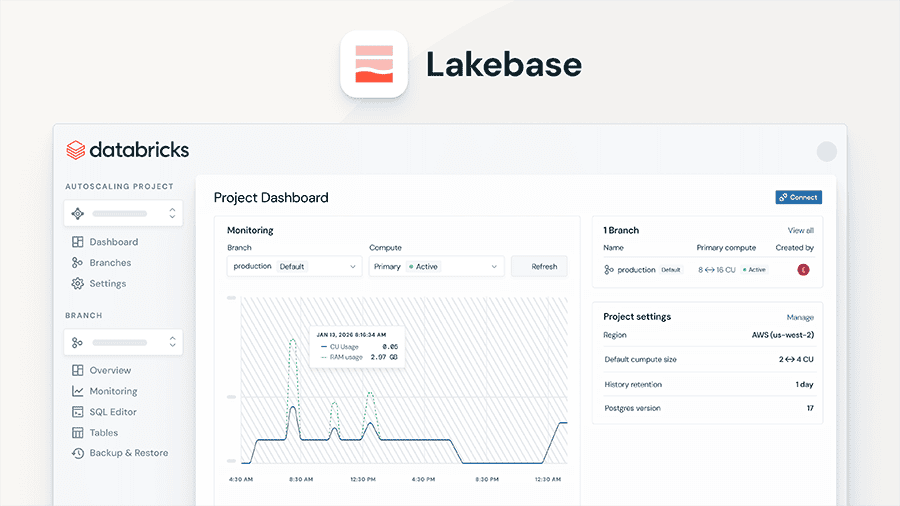
Lakebase
At last year’s conference, I thought the Neon acquisition was going to be a big deal, and it certainly was this year. Lakebase (the Databricks product rename of Neon) was everywhere, including the password for WiFi access.
I think Lakebase is the most significant RDBMS change in 40 years, due to the separation of compute and storage, along with the ability to do GIT branching, and DB copies < 1 sec. There were lots of sessions on Lakebase. Some of the use cases that can only be done with this branching capability include:
- A Database per Developer, per PR
- Easily test against production data
- Destructive testing without permission
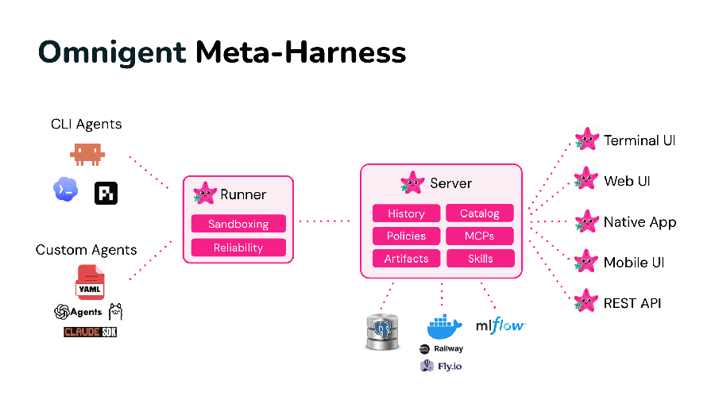
Omnigent
I have done some work with the new “meta-harness” called Omnigent, which wraps popular Agents harnesses (Claude Code, Codex, Pi, etc.) in a higher layer, providing cross-agent and parallel harness execution, with policies and cost management.
I don’t think it’s quite production ready; however, it has a lot of promise, and I expect it will provide significant value, assuming Databricks continues to enhance its capabilities.
Thoughts from Eric Brown
Director of Engineering at DevIQ [LI]
Lakebase
Transformative database operation, particularly because of the database branching model. I can see this being useful for:
- Development and test environments
- Feature-flagged releases with database-specific dependencies
- Bug reproduction
- Safe experimentation with real or realistic data
- Pre-production vulnerability testing
- AI-assisted development workflows
The big idea is being able to treat database state more like code. That could be really valuable for our Symphony platform where agents need safe places to test, reproduce issues, and validate changes.
SIEM (ZeroOps and Lakewatch)
The idea of using Databricks to monitor not just Databricks, but also external applications, is really compelling. This could include logs, app events, security signals, deployment history, errors, and vulnerability data.
The bigger promise is software that is continuously monitored, analyzed, and improved. Maybe not literally “zero-vulnerability software,” but moving toward that goal: finding problems earlier, understanding them faster, and fixing them with more automation.
Pairing Lakebase and its data branching strategy with automated vulnerability testing and the SIEM tools (or at least architectural concepts) is very exciting.
Thoughts from Amit Agrawal
Solutions Director, AI and Data Science at DevIQ [LI]
Disposable database economics. Lakebase's scale-to-zero compute and copy-on-write branching collapse the marginal cost of a database to roughly its divergent bytes plus its active compute-hours, making "a database per tenant, agent, task, or PR" the default and turning isolation into the free option.
That same architecture makes ZeroOps real: with no provisioning to do, an ops agent runs Detect → Assess → Remediate → Verify on its own – validating every fix on a throwaway branch before it touches production, with point-in-time recovery as the one-click undo – and the very same autonomous loop, aimed outward at threats instead of inward at the database, is what powers Lakewatch, Databricks' agentic security product over the connected lake.
Because Lakebase shares the same governance and building blocks as the rest of the platform – Unity Catalog for access, the AI Gateway for model calls, plus Agent Memory, Agent Bricks, and Genie for ML – the database becomes something agents allocate, govern, and heal on their own, instead of something people operate.

Thoughts from Josh Bingham
Alliances & Marketing Director at DevIQ [LI]
The Keynotes on Tuesday and Wednesday were very exciting and jam-packed full of impressive updates and insights from Databricks executive leadership and partners.
A few breakout sessions delivered some solid examples of the accelerating capabilities that derived from Databrick products and services. A few of those included:
- A biomedical company used the Lakehouse Architecture to find scalability and flexibility to help diagnose cancer with much better precision, thus helping doctors choose the best treatments at the correct time. Literally, the implementation of Databricks into the process SAVED LIVES.
- NBC Universal presented how Databricks products helped reduce costs, increased processing speeds, and made their data more interoperable. This resulted in more on-time deliveries, reduced data replication, and flexibility for major events.
- A large Bank in Europe was able to detect and stop money laundering operations.
These examples reminded me of DevIQ’s mission of “Improving Life” through helping clients accelerate their technology/business goals.
Databricks Data+AI Summit Resources
These are just the tip of the iceberg. As Databricks continues to innovate and we at DevIQ are here to guide your enterprise data+AI journey. To dive deeper, explore the DAIS 2026 app, review this comprehensive list of major announcements, and watch the recap:
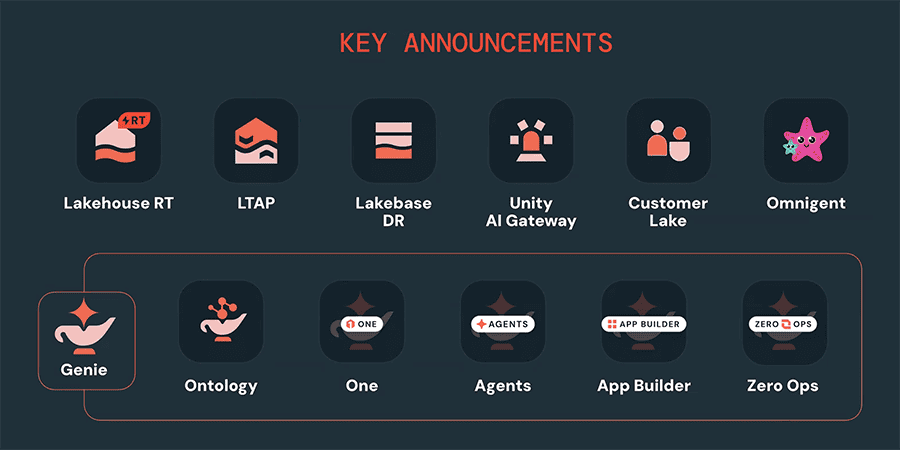
- Genie One – Genie One, your data-smart AI coworker, is powered by enterprise deep context from Genie Ontology. Together, Genie One and Ontology connect to all your enterprise data to automate data work with tools, skills, agents and MCPs.
- Lakehouse//RT – Lakehouse//RT brings millisecond speed and massive scale directly to your lakehouse. Now there’s no need to manage separate systems or copy data to achieve real-time analytics.
- LTAP: Lake Transactional/Analytical Processing – LTAP gives users and AI agents a single governed system of record for both transactions and analytics, all in an open data lake. With Lakebase powering transactions and Lakehouse serving analytical queries, there’s unification with no performance compromises.
- Lakebase Multi-Cloud Disaster Recovery – Multi-cloud DR is coming to Lakebase for mission-critical workloads. With this, you’ll be able to set up one-step failover across workspaces in different regions and clouds.
- Lakeflow – Lakeflow unifies data engineering, enabling Genie Code to automate end-to-end pipeline construction across ingestion, transformation and orchestration - including via Lakeflow Designer.
- Genie ZeroOps – Genie ZeroOps puts data engineering and ML pipelines on autopilot. It monitors production workloads, investigates issues and suggests fixes for verification so teams can scale to new agentic needs.
- Apps on Databricks Marketplace – Purchase, install and run third-party apps from the Databricks Marketplace directly inside your workspaces, all operating within secure, governed environments.
- AI Governance with Unity AI Gateway – Control AI access, security and spend for everyone and every agent in your organization. Set per-user budgets, enforce guardrails and automate the use of lower-cost models to maximize AI access while automatically optimizing spend.
- Omnigent, the open-source agent meta-harness – Agentic coding has exploded, and so have the challenges of how teams compose agents, collaborate across sessions and control coding agent cost and security. Omnigent is the open source multi-harness that makes multi-AI, multi-harness coding workflows seamless for teams.
- Agent Bricks, the agent development platform – Build and run agents the open way with Agent Bricks, powered by Omnigent. Choose any (or every) harness, you get seamless and context, agent memory and secure access to models, MCP and skills, governed by Unity AI Gateway.
- CustomerLake – CustomerLake is an agentic CDP embedded into Databricks that equips marketers and data teams with a workforce of agents to deliver the perfect customer experience every time, a billion times a day.
- Lakewatch + Panther – Cyber threats have evolved. It’s time to fight agents with agents. Lakewatch, the Agentic SIEM built on a security lakehouse, is now accelerated by Panther’s AI SoC agents and 100+ new connectors to key security data sources.
- Genie App Builder – Anyone with a clear idea, whether it be a business analyst, a domain expert, or an operations lead, can describe what they need in plain language and get a functional application in hours.
- Genie Code and ZeroOps – The dream of fully-agentic ML has arrived: automate model training with Genie Code and ongoing model optimization and maintenance with Genie ZeroOps.
- Unity Catalog – Unity Catalog has expanded to include Unity AI Gateway, and it now spans customers’ entire Databricks footprint, including accounts, regions and clouds for a single, unified view of their data estate and its governance policies.
Authors: Shawn Davison [LI] · Eric Brown [LI] · Amit Agrawal [LI] & Josh Bingham [LI]
